**Episode Title: "E07: ABC Radio Interview with Dr. Warrick Bishop"**
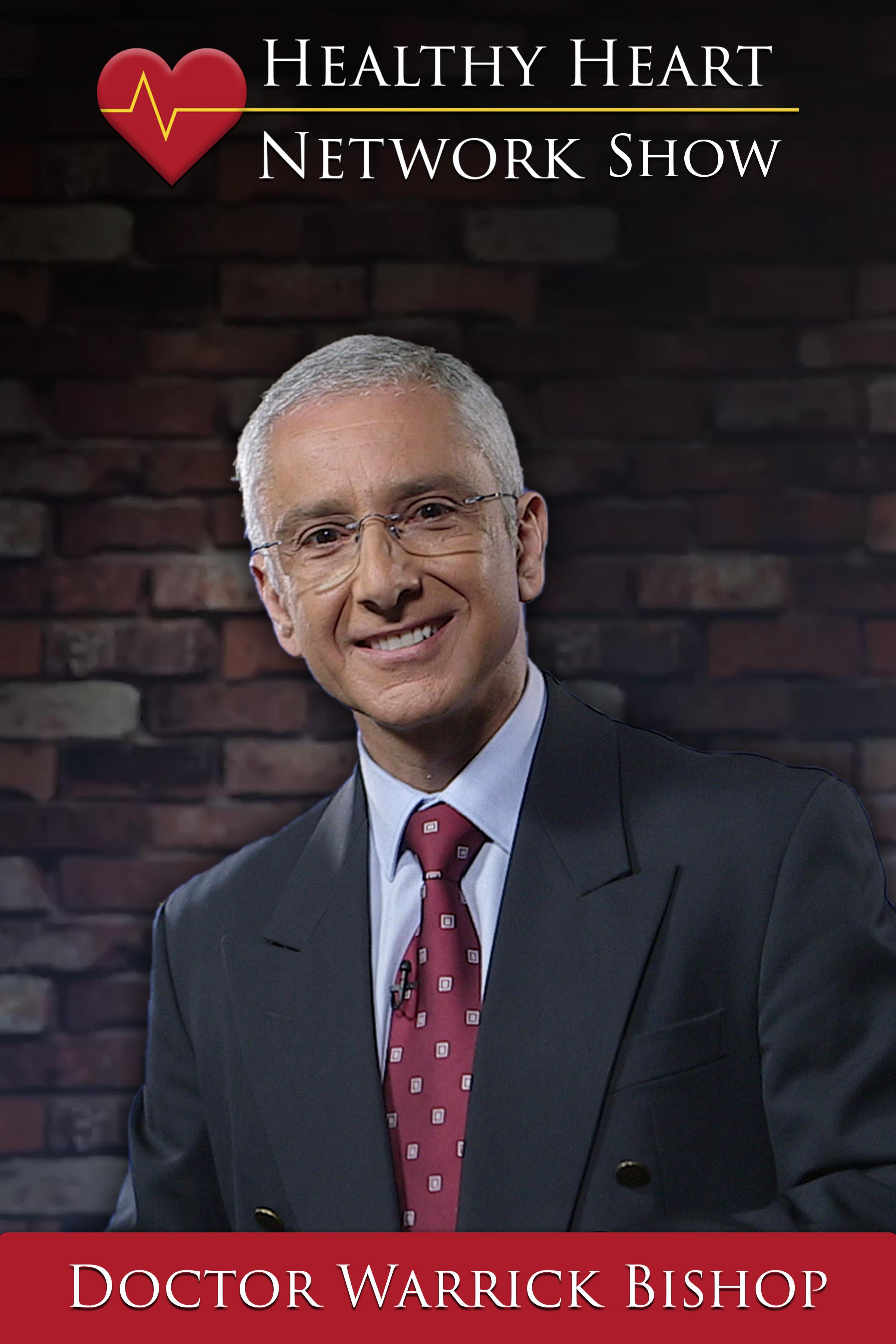
**Host:** Welcome to Dr. Warrick's podcast channel. Warrick is a practicing cardiologist and author with a passion for improving care by helping patients understand their heart health through education. Warrick believes educated patients get the best health care. Discover and understand the latest approaches and technology in heart care and how this might apply to you or someone you love.
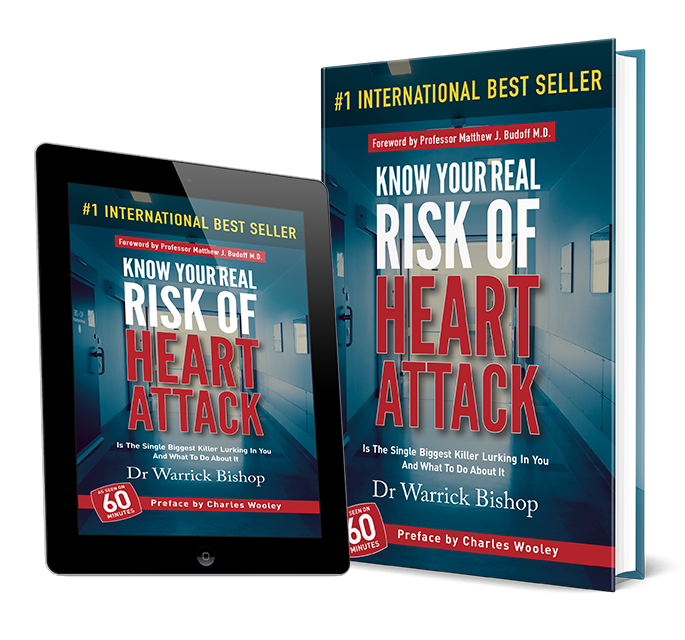
**Host:** Somebody I have to introduce to you now, it seems quite generous of him to tell you what he's in to discuss today. He is effectively trying to do himself out of a job, or at least a chunk of his job. Dr. Warrick Bishop is a Tasmanian cardiologist, the author of a new book called *Have You Planned Your Heart Attack?* Hello, Doctor.
**Dr. Bishop:** Hello, Helen. How are you?
**Host:** Well, indeed, thank you. Can we jump back to 2005 to start this conversation, where a man survived a heart attack he had at a fun run? How did he change the way you did your job anyway?
**Dr. Bishop:** Look, I realised from the situation that this is a gentleman I'd seen a couple of years earlier. I'd reassured him that everything seemed to be fine. I'd done everything that was standard at the time. I'd done nothing wrong, actually. And yet, two years later, I was part of the team that resuscitated him by the side of the road. And that challenges you. I went back and looked at the notes and I thought, well, you know, is there an opportunity to have given this man better forewarning? At the time, there wasn't actually.
**Host:** How did that feel as a professional to know that he was beyond the limits of your capacity?
**Dr. Bishop:** It was a bit of a surprise. I actually used that story in the front of the book. One of the things that was... was that he was really well looked after. There were people who helped. I pulled over because I was passing by. I helped out, noticed it was a good outcome. I was telling my staff about it literally on the Monday morning after the City to Casino. He was on the front of the paper. And basically, they said, well, you saw him two years ago. My jaw dropped, actually. And it's a realisation that some of the techniques we use, some of the things we use to reassure us that everyone's okay, we can do a bit better. The technology, in fact, the book I've written is about some of the technology we can use to image the heart, to give us more clarity and more precision. The reality is, if I'd seen that gentleman in 2013, not 2003, 10 years later, I could have offered him extra imaging, extra evaluation of his heart, and no one would have been surprised. In fact, we may have avoided that problem altogether.
**Host:** Well, you've been the first to take on that new technology and to become accredited with it in Tasmania. How does it work?
**Dr. Bishop:** So the technology of its own is not a new technology. We use CT scanning, but as you're aware, mobile phones have got better and better, computers have got better and better, and CT scanners have got better and better. Up until only relatively recently, we haven't been able to take pictures of the beating heart in a living subject. It's really only in recent years, Helen, that we can now get beautiful images of someone's beating heart because our technology has improved enough. The newest, most up-to-date CT scanners allow us that chance to look inside and see what the health of the arteries actually is.
**Host:** It's probably most commonly known for looking at a baby's beating heart in utero, isn't it, CT scanning?
**Dr. Bishop:** No, that's ultrasound. Different. So using sound waves, we're using x-ray.
**Host:** Right. So CAT scan is CT scan. And we've historically used it for all sorts of things. And even outside of the doctor's surgery, you certainly go into a lot of detail about, it's not just what the professionals are doing, but what all of us are doing. Because what sort of statistics do you come up against as far as heart health goes in Australia?
**Dr. Bishop:** So there's no question that heart issues are one of the major concerns across the community in terms of mortality, morbidity, suffering to individuals, and cost to the community. In fact, I donate my time to the Heart Foundation to try and help in those issues. The reason for writing the book, though, was an understanding that we can be proactive as individuals and ask questions for ourselves. The technology is not mainstream at the moment. It's really on the horizon of adaptation. There are plenty of doctors who are starting to use it, but it's gradual. My drive for writing the book was to try and empower individuals who really wanted to be ahead of the game themselves, who really wanted to choose, for their own reasons, to have a conversation with their GP about whether this sort of testing is appropriate for them or not.
**Host:** Is having a heart attack a lifestyle disease, for want of a better term?
**Dr. Bishop:** Well, look, there's no question that we think of it in those terms. And there's no question that if we find lots of people with terrible lifestyle habits who may be overweight, may have elevated blood sugar, elevated blood pressure, or smoke, this is a group where a higher percentage of people in that group will have a heart attack. But the scary truth is this, Helen, and that is that we can take people who look seemingly unremarkable, seemingly fit and well, or really not too much going on. And within that group, although it's less likely, we can still find people who have a heart attack or a coronary event. And that's the bit that we can do better, in my opinion. Plenty of case studies. Well, this really is the sort of person who I first met in 2003 and then helped in his resuscitation in 2005. This was a gentleman who was running regularly, was not overweight, was generally looking after himself. It was even on some blood pressure medication.
**Host:** Dr. Warrick Bishop with you on ABC Radio Hobart and across Tasmania for your afternoon. He's released a book, *Have You Planned Your Heart Attack?* And he's a Tasmanian doctor who is getting the latest technology and lifestyle advice out to help you hopefully plan, well, to not have a heart attack would be the preferable point. This isn't a textbook. You've made this. It's colourful and it's illustrated, and the language is very simple. How strategic is that?
**Dr. Bishop:** Look, I really got to the stage, Helen, where I realised that the uptake of this technology requires gradual change within the medical community. It needs studies and evaluations, and some of those studies are underway. But it will take a little while before they come to place. I also realised that some of the GPs, particularly locally, haven't grown up with this technology, so it's fairly new for them and there's a learning curve for them. What I actually got to realize was that the person who may be most interested in knowing about this individualization of therapy may be the patient. And look, I'm confronted all the time with people looking up Dr. Google, knowing everything about everything. I actually thought, well, if there are motivated people out there, I will give them information, which is really a reflection of the conversations I have with people on a daily basis. So I wrote it for the end consumer, for the interested individual, the 50-year-old male or his wife who will pick up the book and make him do it. The way it's written, I literally sat down and wrote the book in the first instance. They invited a publisher to actually give me some feedback on it. In the nicest possible way, they said, I'm sure this is interesting and some medical students will get something out of it. But don't worry. Don't bother, darling. I really thought that there was a conversation to be told. So I went back and reworked it. I had the fantastic help of a ghostwriter plus a graphic designer to really try and make it relatable, user-friendly, visually pleasing. I still think there's a real story there to be told.
**Host:** Dr. Warrick Bishop with you. How controversially has it been received in the medical community? As you say, if there are doctors who aren't as adaptive to the new systems?
**Dr. Bishop:** Yes, I'm waiting for some of that feedback because the book's really only been released this week, really, Australia-wide in Amcal and Guardian pharmacies initially. Then in March, it'll go into general bookstores. I certainly know that there are cardiologists who are well aligned with the approach that I use. If you look within the book, you'll see supportive statements from some of the leading cardiologists in this technology in Australia. What the feedback will be in the next couple of weeks will determine it. But I've really tried to create an environment of a conversation so that the patient can know what's available, know where it may fit in, and then engage their doctor in a conversation. Is this right for me or not? Really, I'm not trying to be... I'm not offering something that's not tested. I'm not offering something that's different. I'm really offering that beginning of a conversation. The more we talk about coronary disease, the better we are at evaluating the risk, the more awareness we put into it, the sooner we can be proactive, and we can put measures in place to prevent the first event.
**Host:** To be offering dietary advice, certainly there's been a high-profile surgeon in Tasmania who has encountered a fair bit of criticism for offering dietary advice and being told he is not qualified to do so. Do you expect to be rebuffed at all for making dietary suggestions as a cardiologist?
**Dr. Bishop:** I don't think I make many dietary suggestions in my book at all. I've stepped away from that.
**Host:** Right.
**Dr. Bishop:** I support particular eating guidelines, which I deal with patients on a one-to-one basis. But this particular publication, I've really not dwelt on eating guidelines at all. I've really dealt with the facts around risk and how we evaluate risk and how CT imaging has been viewed and where it may fit in for an individual. Literally to try and support that conversation for an interested or a motivated patient, whether their cholesterol is high, whether there's a family history, whether they just want to get a check out, whether they're having side effects from statins, so that those individuals can have enough information to have a meaningful and sensible conversation with their general practitioner.
**Host:** Ultimately, what would you like to see happen in your field?
**Dr. Bishop:** Look, that's a really good question. At this stage, and in the book you may have, I don't know how closely you've read it, but I've alluded to studies which we really need to validate this in a longitudinal way. That means over time. The problem is we can't scan people and randomise people who appear to be high risk based on their scans into a treatment group and a non-treatment group because suddenly we're disadvantaging the people who we found are high risk, and that's not fair. So I'm hoping that time will demonstrate clear registries where we follow people and track them over a period of time, where we demonstrate that intervention and knowing what's going on reduces risk and reduces cost, reduces morbidity. Once we start to get that compared to our current best practice, then it would be a very sensible thing to be taken up more broadly. That's when government and guidelines would kick in.
**Host:** Are you being invited for some launches on the Big Island?
**Dr. Bishop:** I'm fortunate enough to have the opportunity to go up to Brisbane this weekend to the World Congress of Clinical Lipidology, where I've been asked to speak, in fact, on this topic, and I'll be launching the book up there.
**Host:** Great. We should be getting you on the chat show circuit with this.
**Dr. Bishop:** This is a chat show, isn't it?
**Host:** Yeah. I want some morning television programs calling you up. I want some national programs getting you on, surely.
**Dr. Bishop:** You're probably far better connected at that than me.
**Host:** Yeah, right. We'll talk some more about this in a moment. Dr. Warrick Bishop is with you, Tasmanian cardiologist who has released *Have You Planned Your Heart Attack?* Currently, a couple of pharmacies are stocking it, but bookstores...
**Host:** You have been listening to another podcast from Dr. Warrick. Visit his website at drWarrickbishop.com for the latest news on heart disease. If you love this podcast, feel free to leave us a review.